- Swirls & light scratches
- Power polishing
- Prep for ceramic coating
What paint correction is
Most vehicles have a clear coat over the coloured paint. Over time that clear coat collects fine scratches from washing, brushes, road grime and winter salt. In sunlight they show up as swirls and a dull haze.
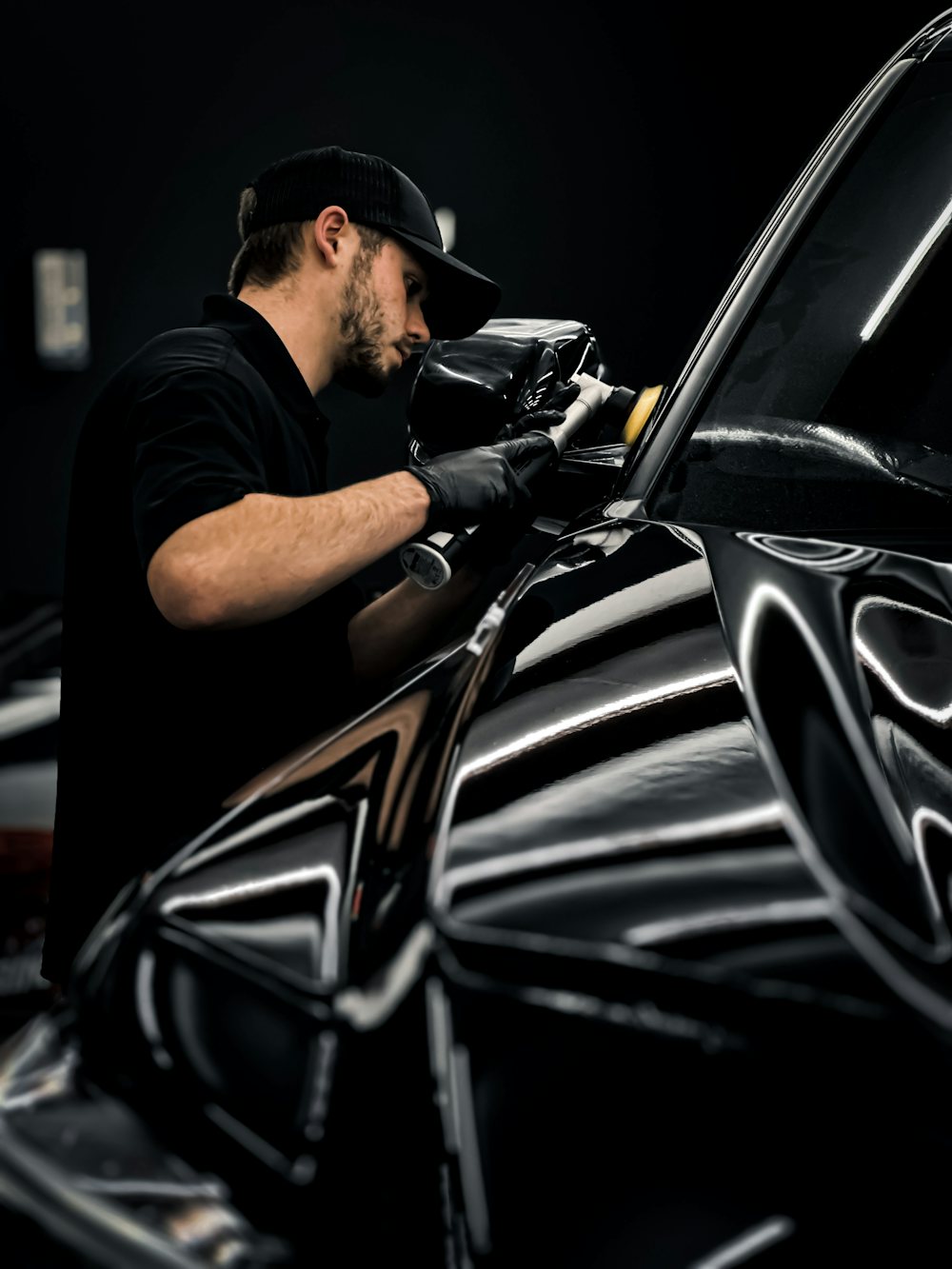
Paint correction uses a machine polisher and abrasive compounds and polishes to level a very thin layer of the clear coat, removing or reducing those defects instead of just filling or hiding them.
What it can improve
- Swirl marks and spider-webbing from washing
- Light scratches and scuffs in the clear coat
- Haze and dullness
- Water spot etching and some oxidation
- Holograms and buffer trails from past polishing
Power polishing vs. full paint correction
Power polishing is a single machine-polishing stage. It boosts gloss and removes lighter swirls and haze. It suits paint in decent shape that just looks tired.
Full paint correction usually uses more than one stage, a cutting compound first and then a finishing polish, to remove heavier defects before refining the finish. It takes longer and removes more.
Which one your vehicle needs depends on the condition of the paint, and on how good you want it to look. We'll look at it with you and recommend one.
Scratch removal: what can and can't be fixed
Scratches that are only in the clear coat can usually be removed or greatly reduced. A simple test: run a fingernail across the scratch. If your nail doesn't catch, it's likely in the clear coat.
If your nail catches, the scratch may go through the clear coat into the paint or primer. Polishing can soften how it looks, but it can't put back paint that's gone. Deep scratches like that need touch-up or body and paint work.
Clear coat is also only so thick, so a careful correction removes as little as needed. That's why results always depend on the paint you start with.
How paint correction is done
- Thorough wash and decontamination, including a clay bar treatment to lift bonded contaminants.
- Inspection under good lighting to see what defects are there.
- Machine compounding to remove heavier defects (full correction).
- Machine polishing to refine the finish and bring up the gloss.
- Wipe-down to remove polishing oils so you see the true result.
- Optional protection: a ceramic coating or paint protection film to help keep it that way.